A detailed process of the research, analysis & end-product of the project
Goal: How might we improve the customer service of the community center?
For this module, we were taught about the attitudinal and observational research methods. Despite the great difference between the 2, they are both essential in understanding the challenges that users experience and potential improvements that could be implemented to enhance the service. With this in mind, we decided upon interviews for the former and covert observations for the latter.
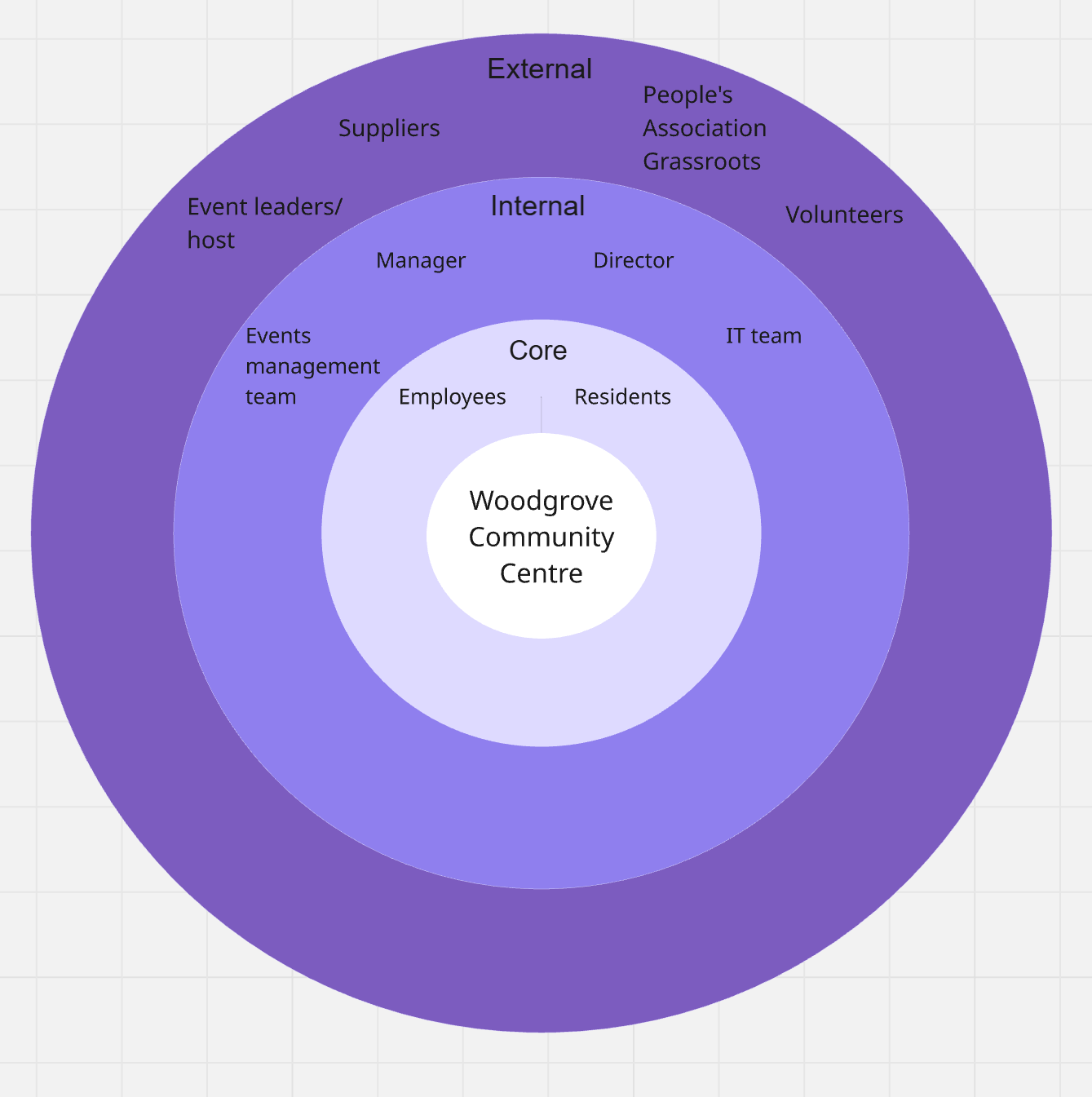
After conducting a group discussion, we decided that the service staff and residents of Woodgrove would provide us with the necessary feedback about the services at the CC.
With a total of 5 members, we were keen to ensure that each of us played an active role in conducting the interviews and covert observations. Thus, we formed 2 groups (2/3 per group) to guarantee that we would collect sufficient feedback during the sessions. We conducted the research during the afternoon of the 19th of January 2026.
In our groups, we each came up with several relative questions about the experience, resources and processes involved with the service. The questions are as follows:
Research questions – a. Attitudinal for Service staff:
Research questions – b. Attitudinal for the Residents
Research questions – c. Observational for Service Staff:
Research questions – d. Observational for the Residents
Residents mainly ask service staff questions about the facilities and generally find signboards helpful for navigation. However, many have issues with the kiosk and often ask staff for help. They use QR codes to sign up for events they are interested in.
People rarely visit the community center except to volunteer. They usually check Facebook for updates, primarily due to the confusing organization of the numerous CC's respective links on the PA website which be hard to navigate. Signing up for activities through SingPass, QR codes, or kiosks is simple enough. However, many residents think the staff are unfriendly at times.
The website and notice boards are often outdated, making it difficult to find current events. Residents suggest that expanding the space and adding notice boards in lift lobbies would improve the community center.
The service staff use a mix of digital and physical tools, such as desktop computers, booking systems, and mobile phones to help visitors. Service delays happen because of slow system loading times, manual data entry, and repetitive checks of information.
To make service better, we can improve the information available, like real-time class availability, member profiles, and booking status. We can also reduce delays by lowering repetitive explanations and avoiding manual form-filling.
Staff often help elderly visitors with digital issues, such as setting up their Singpass for bookings or answering questions about government services like transport vouchers. Overall, the staff find the tools and resources provided sufficient and easy to use.
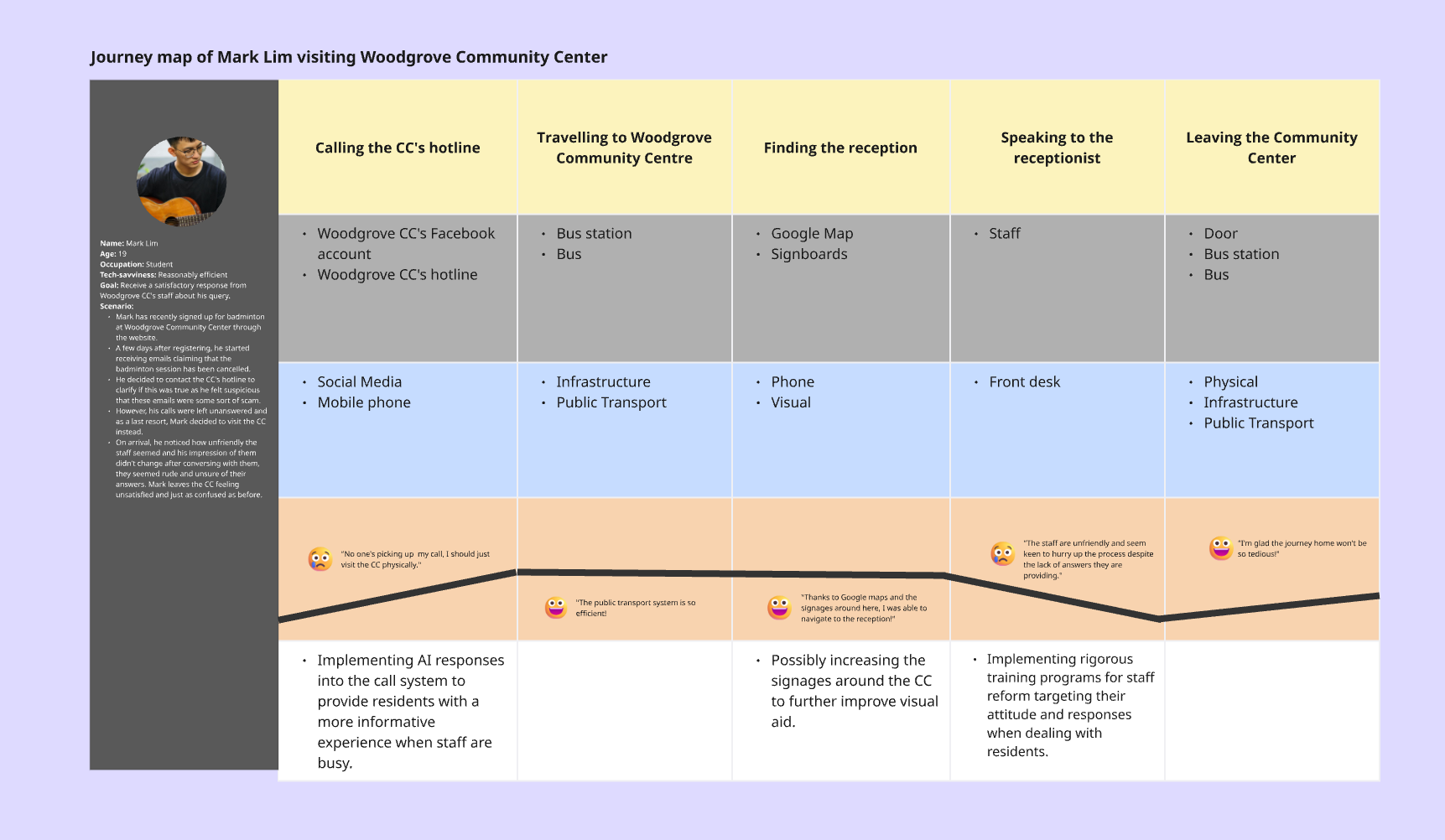
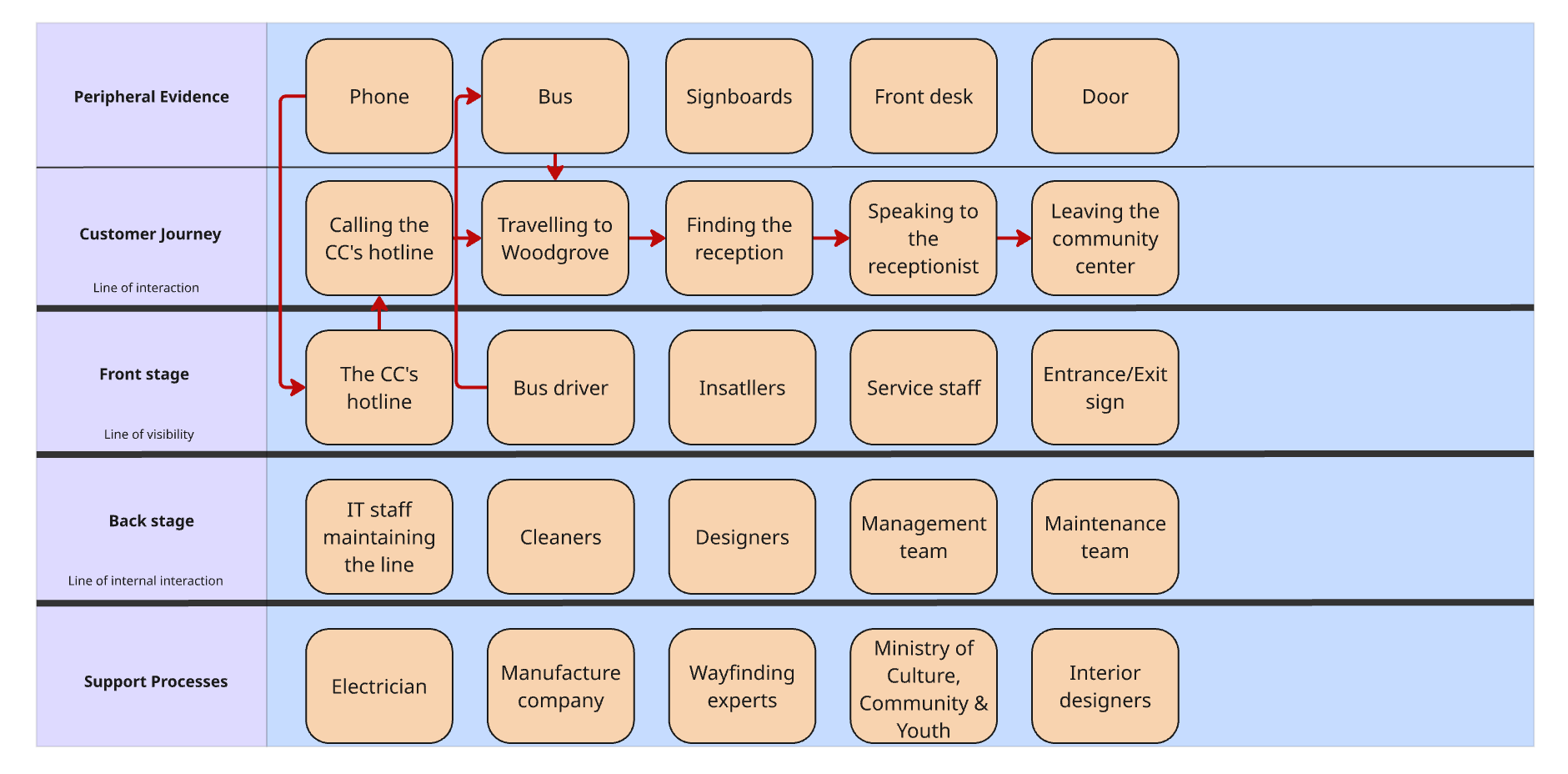
Firstly, the behavior of the staff during certain interactions, such as physical conversations and phone calls were commonly regarded as rude by the residents. Secondly, some residents also experienced ignored or unanswered calls even during office hours. Thus, the issue we plan to address is the poor customer service

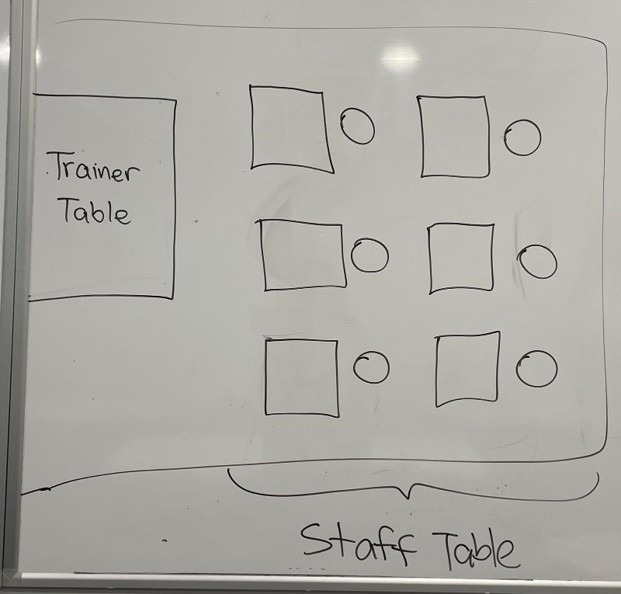
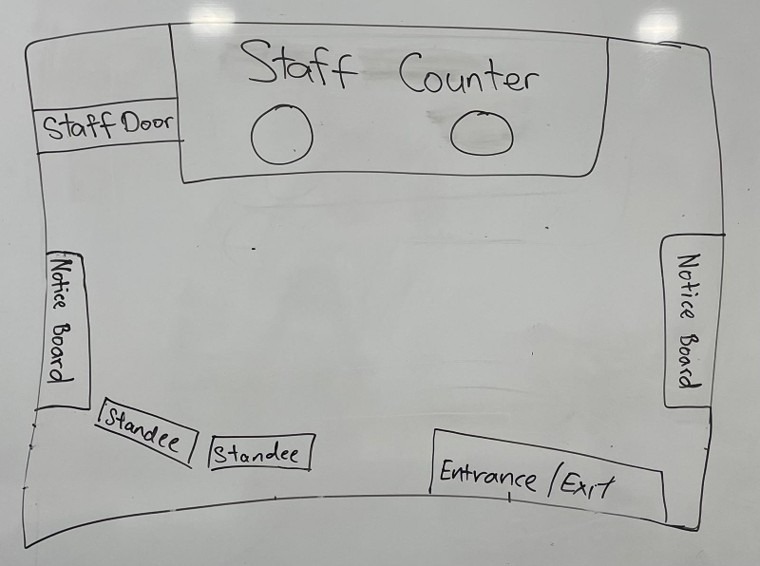
Our chosen method was the service prototyping method. We felt that this was the most effective manner to experiment with as it provided us with a realistic example of how the solution could possibly take form, allowing us to rewatch and note down possible areas for refinement.
The final idea we decided upon was an extensive training program for service staff to improve customer service. Essentially, the service staff at the community center will be tasked with attending a mandatory training program that focuses on improving their physical and digital interactions with residents. They will also be taught how to properly handle enquiries and complaints from the residents. Hence, this staff training would ensure the service staff are equipped with the basic knowledge and skills of customer service and how to better serve the residents.